
Why do Hindus worship Tulsi?
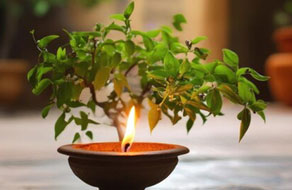
Dr. Sethu Raju and Pundit Pramod Sharma (Gaur) Mythology and holy figures are necessary for any great culture to rest on its stable spiritual foundation and function as a life-giving inspiration and guide. Hinduism or Sanatana Dharma is no exception. It is the Mythology and tradition that bind the vast number of Hindus together as one people, despite caste, space and language that seemingly divide them. Worshipping tulsi, as a faithful ritual and belief, is a common practice among all Hindus. There are also many legends associated with this worshipping. Hindus, more so the followers of Vishnu, who are called Vaishnavaites, worship the plant Tulsi and tend it very carefully, believing that it is God’s representative, thus making it sacred. Commonly, the Tulsi is planted on a little mound of soil which is usually called ‘Vrindavana’ (the abode of Lord Vishnu) or on a special square brick pillar of about one meter high, hollow at the top where the plant is raised; the four sides of the pillar represent four major directions of the planet. Often, images of deities are installed on all four sides, and also create a small alcove (space or room) in the special structure for a small earthen oil lamp. Hindus very carefully nurture the plant with reverence, believing that there is “nothing on earth can equal the virtues of Tulsi (tulanaa naasty athaiva tulasi)”. In fact, it is also known to be the only plant used in worship, which can be washed and reused in pooja, as it is regarded as self-purifying. A Hindu household is considered incomplete if it did not have a Tulsi plant in the courtyard in the house. As a daily ritual, the lady of the house waters the plant and lights the lamp; finally, she offers daily prayers to the Tulsi while circumambulating at the same time. There are many legends in literature that regard Tulsi as sacred. One of the legends is that Tulsi was the devoted wife of Shankhachuda, a celestial being. She believed that Lord Krishna once tricked her into sinning. So, she cursed Him to become a stone (shaaligraama). Recognizing her sincere devotion and adherence to righteousness, the Lord, however, blessed her to become the plant, Tulsi that would adorn His head and also remain worshipped forever. There is also the legend that Tulsi symbolized Goddess Lakshmi, the consort of Lord Vishnu. Those who wish to be righteous and want to have a happy family life must worship Tulsi. Some Hindus also believe that the Lord blessed Tulsi to be His consort. According to another legend, Satyabhama once weighed Lord Krishna against all her legendary wealth. The scales did not balance until a single tulsi leaf was placed along with the wealth on the scale by Rukmini with devotion. Thus tulsi played a significant role, to demonstrate to the world that even a small object, when offered with devotion, is more to the Lord than all the wealth in the world. There is a sacred sthotrum in Sanskrit often Hindus recite: Yanmule sarvatirhaani Yannagre sarvadevataaYanmadhye sarvavedaascha Tulasi taam namaamyaham (I bow down to Tulasi, at whose base are all the holy places, at whose top reside all the deities and in whose middle are all the Vedas). The use of tulsi also carries some religious significance and belief. Besides many gods and goddesses in many temples, tulsi plant is also grown separately for worshipping. In fact, the ‘Tulsi Maanas Mandir’ at Varanasi is a well-known temple in India where Hindus go on pilgrimage to worship specially tulsi. While worshipping, Hindus, especially Vaishnavaites, offer Tulsi to please Lord Vishnu, and also they themselves wear beaded necklaces made out of tulsi sprays while praying. When a Hindu is dying, tulsi sprays are placed on his face, eyes, ears and chest. The body is sprinkled with tulsi twig dipped earlier in water (preferably blessed) for purification of the body with the firm hope that the ‘person’ will reach heaven with no sins. P.S. Besides its religious significance, tulsi also has considerable value in science and medicine. Somewhat similar to a cow, which Hindus consider sacred, there is considerable evidence to regard Tulsi also as sacred! Tulsi is a common plant, native to India. The Latin name of the plant is Ocimum sanctum. (Sans: suvasa thulasi, ajaka, brinda, manjari, parnasa, patrapushpa; Hindi: tulsi; Ben: tulasi; Mar: tulasa; Guj: tulsi; Kan: vishnu thulasi; Tel: thulasi; Mal: trittavu; Tam: thulasi). It is commonly called in English, Holy Basil or Sacred Basil. There are two varieties – the green (also called light or Sri or Rama thulasi), and purple (also called dark or Shyama or Krishna thulasi), the latter variety being medicinally more effective. The leaves and seeds yield essential oil (somewhat similar to clove oil). It possesses insecticidal and antibacterial properties and is also a mosquito repellant. Extracts of leaves, seeds and roots are used in various ailments, skin diseases and genital-urinary disorders in humans. Tulsi is regarded as a medicinally useful plant in ancient Ayurvedic medicine. It Is No Wonder That Hindus Worship Tulsi!
The Hindus-In Pursuit of Peace

Sachendra Nigam and Sethu Raju The sound of one of the most frequently uttered chants that reverberates in all Hindu temples is – Om Shantih, Om Shantih, Om Shantih” (Aum Peace, Aum Peace, Aum Peace). This ritual of prayer for peace is very characteristically repeated thrice – chanting aloud first, addressing to the powerful forces, such as Earthquakes, Tsunamis, Volcanoes, Meteorites, and other natural phenomena that are beyond human control, second time addressing the same softer to the people and all life immediately around and out in the world, and finally addressing almost silently to oneself, to aatma or soul. This pattern of praying is significant, indicating the importance that the Hinduism, the religion and the way of life of the Hindus, gives to maintaining peace in the world. Unfortunately, this sincere and persistent universal praying for peace, however, has not ousted the human conflicts in the world. They still occur in many forms at all levels of the humanity. It seems, therefore, that, besides genuine praying for peace, the Hindus need also to identify and understand the causes that have generated conflicts among the humans of the world. To trace the causes of human conflicts, perhaps one has to understand the probable origin and evolution of the human race itself. A relatively recent publication entitled “Mapping Human History – Genes, Race and Our Common Origins” by Steve Olson, Mariner Books, Houghton Mifflin Co., New York, 2003, gives a succinct account of the chronology of the human race with its origin, development and diversity on the planet earth. It says that the modern humans appeared first in East Africa (Ethiopia, Kenya and Tanzania) 150,000 years ago. Subsequently, they spread out of Africa in different directions. By 100,000 years ago, some humans had migrated northward along the Nile Valley (Sudan and Egypt) and across the Sinai Peninsula into the Middle East. More than 60,000 years ago, some early humans made their way along the coastlines of India and southeastern Asia into Australia. About 40,000 years ago, a few other human groups moved out of northeastern Africa into Europe, and others through southeastern Asia into eastern Asia. Finally, about 15,000 years ago, some went along the wide plains of Siberia to Alaska (now separated by Bering Strait) and radiated southward throughout the length and width of the North and South America. These migration patterns of humans suggest that every one of the about 6 billion humans of the planet today is a descendent of a small group of humans, our ancestors, that originated and lived in East Africa 150,000 years ago. While spreading out of Africa, our ancestors had to face the vagaries of the environment or nature (land geography and climate) over which they did not have much control. The genius of these humans, however, was such that, instead of accepting what the nature had offered, they attempted to manipulate it for their own benefit with determination and ingenuity. Such an attempt was, in fact, a very important trait that distinguished the humans from rest of the animal kingdom and eventually led them into the path of technological innovation and development. The period from 50,000 years ago to 11,000 years ago (9000 BC), which is designated as the Late Stone Age (Upper Paleolithic), could be regarded as the first technological period of some degree of sophistication. This was the time when the tools and weapons, made out of stone and bone, were found in the areas of early human settlements; the use of metals was unknown during this period. Eight thousand years ago (6,000 BC), however, metals were found associated with the human settlements, copper being the first, indicating early technological development (The Atlas of World Archeology, edited by Paul G. Bahn, Checkmark Books, New York, 2000). The last ice age ended 11,500 years ago and allowed in the northern hemisphere milder climates that helped humans to migrate further northward and also to develop agricultural practices. The people domesticated wild plants with the result crop plants such as wheat, barley, lentils, etc. were developed, and similarly some domesticated animals such as goat, sheep, cattle and pigs were also developed. The early domestication of plants and animals took place in the Near East (Lebanon, Iraq, Syria and Turkey) where the people, at the time, had replaced their nomadic traits by stationary life, establishing small human settlements or communities. The availability of food resources further opened the way for activities replacing their earlier practice of nomadic hunting, gathering and scavenging. Finally, the human societies were established on the planet earth with the eventual disjunct development of three ancient civilizations, the Chinese, the Egyptian and the Indian, in the orient and the great Mayan civilization in the occident Americas that put them on the road leading to where the human race at present stands on this planet. Thus, in the last 100,000 years, in retrospect, small groups of humans migrated from Africa, multiplied and also settled in many parts of the world, developing early human civilizations. These early small human groups with their individual adaptive genetic potential were exposed to the highly regulatory influence of the environment. These combined genetic and environmental effects brought many changes to the peoples in their physical appearance and behavior to become the human groups or races that were identifiably distinct and remained different from each other in their new settlements; they were also together different from their African forebears. Such differentiated human groups or races were formed by 10,000 BC, evolved in isolation and each, in time, developed its own physiognomy, culture and tradition (The New Penguin History of the World, by John Morris Roberts, Publisher Penguin, London 2004), thus indicating the early human civilizations were, in fact, physiognomically and culturally highly diverse. In the last 2000 years, many human societies or races gradually enlarged and prospered in relative isolation and calm, and some even formed kingdoms. Human conflicts did, of course, exist among them during this period, and they were mainly due to the greedy actions of
Do Hindus Worship Many Gods?
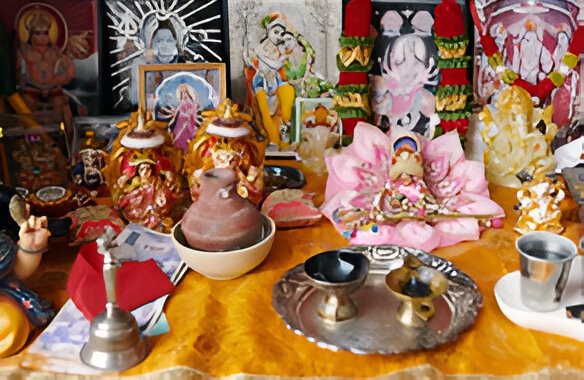
Sethu Raju & Surinder Sharma (PH) Do Hindus worship many gods? Undoubtedly, the answer is yes. There is ample evidence to show that Hindus, in general, did worship in the past many gods (deities, idols or icons), do worship similarly now, and will also worship the same in the future. Let us try to trace how this trend might have originated and developed in the past, and how this trait got firmly tied up, as a multi-idol-worshipping ritual, with the Hindus. About 5 million years ago, the ancestors of human-like species appeared in a favorable environment on this planet, and after a period of three more million years of evolution and diversification, the present human-like species appeared. They gradually migrated, as nomadic peoples, to many new places. During this period of their intense migration, they were, no doubt, exposed to the ever-changing environment. Guided by their genetic potential and their own spirit of adventure, these already diversified nomadic peoples developed primitive technologies to adapt themselves to the imminent environmental changes. Following the instinctive leads of their ancestors, they were able to identify and domesticate plants and animals around them for their use and survival. These abilities together with their instinctive potentials made them less nomadic and settle themselves with some sort of ‘togetherness’ or primitive societies or communities in selected niches. One of the most fundamental traits of these semi-nomadic peoples was to develop gradually a means of communication, which perhaps included gestures and primitive phonetics. They also noticed the influence of the forces of nature, such as wind, light (day) and dark (night), water, fire, etc. These natural influences were so great on them that they were inevitably led to inexplicable beliefs and/or miracles around them. As such miracles were beyond their understanding or creative ability, these semi-nomadic peoples believed in the existence of some other being (s) greater than their own human kind, the Supreme Being or ‘God’, indicating the beginning of religion and faith. Thus, these peoples with faith in miracles were impelled to personify the forces of nature, such as the sun God (Surya), wind God (Vayu), fire God (Agni), etc.Exploring the nature and extolling its wonders, they continued to create more personified iconic gods. Such peoples, who believed in the existence of some Supreme Being(s), diverged and adapted to different environments. Endowed with their own traditional beliefs, they infrequently converged back in time (after one or more generations) and mingled with their ancestral groups bringing about a more diverse ‘culture and tradition’, firmly retaining their own. Some groups, large and small, with such social characteristics of their own, were also perhaps geographically isolated. The population of each of such disjunct human social groups enlarged in number and settled by shedding many of their semi-nomadic traits. They also developed their own culture and tradition, which may together be called ‘human civilization’. Thus, many such parallel civilizations, basically heterogeneous in nature, including peoples of different cultures and beliefs and possibly also different ‘ethnicity’, occurred in different geographical locations on the planet. One such great civilization was the ‘Hindu or Harappan civilization’ or ‘Indo-Dravidian or most familiarly called ‘Indus valley civilization’ which presumably became well established and flourished about 4-5 millennia ago. The people, at the time, were probably sophisticated with a good knowledge of many aspects of life, including perhaps beliefs or faith which together may be identified as ‘religion and god’. Some semblance of what we now call religion and philosophy was also developed among these peoples. With their inability to conceptualize the god’s physical nature or form, the peoples of Indus valley civilization or ‘Hindus’ probably realized that there was ‘something’ more powerful than their own human form. The early peoples perhaps also believed that the human form as fundamental, and that the addition of extended physical and emotional features to it would be superhuman and divine. Accordingly, they created many godly icons, such as the Creator (Brahma with four heads and many hands, the Preserver (Vishnu with four hands lying on a serpent), the Destroyer (Shiva with many hands and elegantly dancing with ferocity on a human dwarf’s back or riding on a bull) and a host of such others. Thus, they created a wide variety of iconic idols and worshipped them as gods with utmost devotion. This was probably the beginning of multi-god worshipping (polytheism). They placed their preferred gods or idols for worshipping in their own dwellings, such as homes in ‘cities’ and caves in forests and mountains. (Temples of gods for public worshipping developed much later). Hindus do worship many such personified iconic gods, which ritual is, no doubt, ingenious and provides religious flexibility, tolerance and respect for all life. This ritual of multi-god worshipping documents the view that the religion of Hindus or Hinduism is basically polyphyletic in origin. In other words, Hinduism was not developed in the past by a single person or a belief, but it is rather a product of a successive evolutionary commingling of beliefs and traditions developed by many individuals or groups of individuals. In its long evolutionary history, Hinduism has shown a great capacity for absorbing new ideas or seeking revisions and adapting them to new conditions. It is the Hindu genius for synthesis that has kept the seemingly rigid Hindu way of life alive and growing for more than five millennia while other contemporary civilizations under pressure crumbled. When Buddha in 600 BC challenged the over-ritualized, priestly Hindu religion, the Hindus of the time simply recognized Buddha as one of the gods of their Pantheon after his death and accepted important Buddhist concepts – such as nonviolence and nonritualistic meditation – and consequently, Buddhism lost its virtual prominence in India. The multi-god worshiping is as old a ritual as the human species itself on the planet. Early peoples created many iconic gods and worshipped them of their choice. Later some religiously knowledgeable peoples (theologians) classified the iconic gods into different categories. Some, such as Brahma (the creator), Vishnu (the preserver) and Shiva (the
Hinduism and Environment
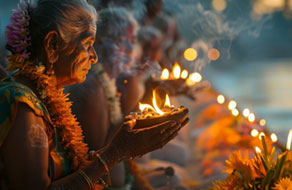
Dr. Sethu Raju and Pundit Pramod Sharma Aeons ago, the wise sages stood on the riverbanks of ancient India and sang their exalting devotional songs that were as if “by the breath of God”. Out of these chants and out of the profound wisdom and spirituality of the sages in the centuries has since grown the Sanatana Dharma or Hinduism, the religion of the Hindus. It contains solid and uncorrupted principles (shrutis and smritis), which may be called the doctrines, to appeal to the vast masses of the followers of this ancient religious faith or the way of life in the world. One of the eternal smritis is the doctrine of Karma. What is Karma? Karma is one of the most important spiritual concepts described in the ancient Vedas (religious scriptures) of the Hindus. Historically, the religious and societal significance of Karma appeared during the period 800-200 BC and eventually became progressively well established during the period what is regarded as “Classical Hinduism” 200 BC – 1100 AD in India. The Sanskrit word Karma is derived from the root kri meaning to do, to act or to work. The principles and the ethical significance of Karma, developed and elaborated by many Indian sages of the past, do correspond to the universal concept of the physical world, the law of “cause and effect” founded by the modern scientists. According to the Vedas, every human action, in thought, word or deed will inevitably end in punya (good or positive result) or paapa (bad or negative result). This concept, which includes the human actions and their appropriate results or events, regulating the infinite cycles of birth, death and rebirth (samsaara of Hinduism) in humans, is Karma. Some Religious Beliefs: Beliefs are absolutely needed by people to belong to a religion. The Vedas say, each living human body (Shariram) has lodged in it a soul (Aatman) which fills it with life and changes an ‘unintelligent mass of inanimate material’ into a living being. Each soul is inspired by the Supreme Soul (Paramaatman) which gives the individual soul its being and its quality as a soul. Just as the soul gives to the body the capacity to function as a living being, so does the Supreme Being give to the soul its capacity to function as an individual soul. This belief is very important in the understanding of Karma and possibly also other doctrines of Hinduism. Karma, which is a retribution for the acts carried out during the life of an individual, is theologically linked to the transmigration of the soul. This means, the Hindus believe that every living being has an ephemeral body clothing the inner eternal soul. The interpretation is that the living being goes through cycles of birth – death – rebirth, thus establishing Samsara and also suggesting that death does not end the chain. Whatever acts that one is engaged in, the body is not the agent but that which (soul) dwells in the body which does not die with death but takes lodging in another tenement by transmigration (reincarnation). The soul or the spirit within continually shapes itself through its previous Karma and builds its future accordingly. The new tenement is one that suits the shape the soul has worked and identified itself into by its own karmic actions. Furthermore, when once it has lodged in a particular body, it has no memory of its past or knowledge of its own true identity. In essence, as far as Karma is concerned, every act has its appointed effect on the soul of a person whether the act is thought, word or deed, the effect being inherent in the cause. It is believed that the body is not the person, but the person’s tool with which the craftsman, the soul, somehow becomes completely one and inseparable for the time being. The soul must also be looked upon as an instrument of God who resides within every soul and uses it, as a craftsman uses his tool. The relationship between soul and body, as well as that between the soul and the universal Causeless Spirit (Paramaatman) is a mystic one in which tool and craftsman are merged inextricably. This mystery, of course, cannot be unravelled, and the Hindus believe this as God’s leela (play). Who experiences Karma? It is believed that only the living beings that are capable of discriminating good from bad, right from wrong, etc., can perform karmic acts and also experience their effects. It means then, the plants, animals and young children (yuan) that are basically instinctual, are excluded from their karmic effects. They are regarded as sinless and remain, therefore, beyond the effects of Karma. So, only the adult humans, who are the sentient beings, can perform karmic acts and experience their inescapable effects or events. Kinds of Karma: A Hindu belief recognizes four kinds of Karma in relation to the present life. 1. Sanchita Karma may be defined as the absolute sum of the karmas (actions) accumulated in the past lives the effects of which need to be resolved in the current and future lives. 2. Agami Karma is that emerges from one’s current life and the consequences of which will be experienced in the future lives and thus becoming part of the Sanchita Karma. 3. Praarabda Karma represents that part of the Sanchita Karma that is in force in the current life and whose results will be experienced in the present or future lives. 4. Kriyaamana Karma represents the creation of the new karma which will be experienced actually in the present life or future lives. Karma and Fatalism: Some people believe that Karma is fatalism. In actual fact, it is not. The Sanskrit twin terms described in scriptures are Karma and Vidhi. They mean work and law respectively, and they cannot be equated with either fatalism or predetermination. Humans are endowed with free will and can create their own ultimate goals or destinies by their karmic actions, comparable to “sowing seeds and reaping the benefits”. Karma is, therefore, the unalterable
The Hindu Doctrine of Karma – in brief
Dr. Sethu Raju and Pundit Pramod Sharma Aeons ago, the wise sages stood on the riverbanks of ancient India and sang their exalting devotional songs that were as if “by the breath of God”. Out of these chants and out of the profound wisdom and spirituality of the sages in the centuries has since grown the Sanatana Dharma or Hinduism, the religion of the Hindus. It contains solid and uncorrupted principles (shrutis and smritis), which may be called the doctrines, to appeal to the vast masses of the followers of this ancient religious faith or the way of life in the world. One of the eternal smritis is the doctrine of Karma. What is Karma? Karma is one of the most important spiritual concepts described in the ancient Vedas (religious scriptures) of the Hindus. Historically, the religious and societal significance of Karma appeared during the period 800-200 BC and eventually became progressively well established during the period what is regarded as “Classical Hinduism” 200 BC – 1100 AD in India. The Sanskrit word Karma is derived from the root kri meaning to do, to act or to work. The principles and the ethical significance of Karma, developed and elaborated by many Indian sages of the past, do correspond to the universal concept of the physical world, the law of “cause and effect” founded by the modern scientists. According to the Vedas, every human action, in thought, word or deed will inevitably end in punya (good or positive result) or paapa (bad or negative result). This concept, which includes the human actions and their appropriate results or events, regulating the infinite cycles of birth, death and rebirth (samsaara of Hinduism) in humans, is Karma. Some Religious Beliefs: Beliefs are absolutely needed by people to belong to a religion. The Vedas say, each living human body (Shariram) has lodged in it a soul (Aatman) which fills it with life and changes an ‘unintelligent mass of inanimate material’ into a living being. Each soul is inspired by the Supreme Soul (Paramaatman) which gives the individual soul its being and its quality as a soul. Just as the soul gives to the body the capacity to function as a living being, so does the Supreme Being give to the soul its capacity to function as an individual soul. This belief is very important in the understanding of Karma and possibly also other doctrines of Hinduism. Karma, which is a retribution for the acts carried out during the life of an individual, is theologically linked to the transmigration of the soul. This means, the Hindus believe that every living being has an ephemeral body clothing the inner eternal soul. The interpretation is that the living being goes through cycles of birth – death – rebirth, thus establishing Samsara and also suggesting that death does not end the chain. Whatever acts that one is engaged in, the body is not the agent but that which (soul) dwells in the body which does not die with death but takes lodging in another tenement by transmigration (reincarnation). The soul or the spirit within continually shapes itself through its previous Karma and builds its future accordingly. The new tenement is one that suits the shape the soul has worked and identified itself into by its own karmic actions. Furthermore, when once it has lodged in a particular body, it has no memory of its past or knowledge of its own true identity. In essence, as far as Karma is concerned, every act has its appointed effect on the soul of a person whether the act is thought, word or deed, the effect being inherent in the cause. It is believed that the body is not the person, but the person’s tool with which the craftsman, the soul, somehow becomes completely one and inseparable for the time being. The soul must also be looked upon as an instrument of God who resides within every soul and uses it, as a craftsman uses his tool. The relationship between soul and body, as well as that between the soul and the universal Causeless Spirit (Paramaatman) is a mystic one in which tool and craftsman are merged inextricably. This mystery, of course, cannot be unravelled, and the Hindus believe this as God’s leela (play). Who experiences Karma? It is believed that only the living beings that are capable of discriminating good from bad, right from wrong, etc., can perform karmic acts and also experience their effects. It means then, the plants, animals and young children (yuan) that are basically instinctual, are excluded from their karmic effects. They are regarded as sinless and remain, therefore, beyond the effects of Karma. So, only the adult humans, who are the sentient beings, can perform karmic acts and experience their inescapable effects or events. Kinds of Karma: A Hindu belief recognizes four kinds of Karma in relation to the present life. 1. Sanchita Karma may be defined as the absolute sum of the karmas (actions) accumulated in the past lives the effects of which need to be resolved in the current and future lives. 2. Agami Karma is that emerges from one’s current life and the consequences of which will be experienced in the future lives and thus becoming part of the Sanchita Karma. 3. Praarabda Karma represents that part of the Sanchita Karma that is in force in the current life and whose results will be experienced in the present or future lives. 4. Kriyaamana Karma represents the creation of the new karma which will be experienced actually in the present life or future lives. Karma and Fatalism: Some people believe that Karma is fatalism. In actual fact, it is not. The Sanskrit twin terms described in scriptures are Karma and Vidhi. They mean work and law respectively, and they cannot be equated with either fatalism or predetermination. Humans are endowed with free will and can create their own ultimate goals or destinies by their karmic actions, comparable to “sowing seeds and reaping the benefits”. Karma is, therefore, the unalterable
God And Human Suffering
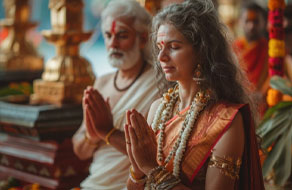
The Hindu perspective Researched and compiled by: Dr. Suresh Basrur In order to address this question, “How to reconcile the existence of God and human suffering?” we must first get an understanding of the relationship between God and human being. Hindu scriptures tell us that every human being has a soul (atman), which is in fact a part of the Supreme Being (Brahman). The goal of the human soul atman is to ultimately become one with the Supreme Being (Brahman). How did the human soul atman become separated from Supreme Being (Brahman)? To understand this, we must look to Hindu scriptures. The scriptures state that the Earth is the only appropriate environment for regaining spiritual energy. Thus, Devas or gods, rishis or saints, all come to the Earth when it is necessary for them to perform austerities and tapas (deep meditation) to regain their spiritual energy, and then return to heaven. In the same manner, the human soul atman when separated from Brahman, comes to the Earth to regain spiritual energy, and then become one with Brahman. The atman became separated from Brahman because it fell out of favour with Brahman, or became attracted to the illusory material world. The soul atman resides in a human body on Earth, and is given an opportunity to redeem itself, re-energize itself, so that it may ascend to the heaven, and ultimately become one with the Supreme Being Brahman. Let us look at the existence of the soul atman in the material world. Bhagavatam: Canto 2, Ch 5, Text 19This says that the material world is manifested as matter, knowledge and activities. These modes put the living entity under conditions of cause and effect, and make him responsible for his activities. In this state, God’s external energy masks the living entity’s pure knowledge of its eternal existence with God, thereby resulting in ignorance; this ignorance causes maya or illusion, and no amount of scientific research can reveal what is beyond the illusion. Bhagavatam: Canto 2, Ch 5, Text 21Even though the material world is created by the Supreme Being, and is controlled by Him, the material world remains separate from Him, and the atmas (souls) therefore are attracted to the material world actively and subjectively. Bhagavatam: Canto 2, Ch 5, Text 23In this state of the human being, the atman residing inside the human form, has its mode of goodness transformed to modes of passion and ignorance. Bhagavatam: Canto 2, Ch 6, Text 22The universal globes, the different levels of heaven, the material world with all its qualities and senses are created by the Supreme Being. But, just as the rays of light from the Sun and the heat from the Sun are created by the Sun but are distinct from it, the souls on Earth are distinct from God. The souls are given the opportunity to liberate themselves. The souls however, by the senses acquired by them, may engage in material activities. These can manifest in the form of greed, anger, lust, cruelty, dishonesty, etc. The path taken by each person on Earth either (1) leads to liberation (atman becoming one with Brahman), or, (2) results in suffering in the present and future births (lives). Every person born on Earth is subject to anguish, pain, disease, old age and death. This is called karma or the burden that must be carried by every person. Even the avatar Rama had to undergo suffering when he was banished to the forest by his step-mother. The efforts required to free oneself from the cycle of rebirth (and its associated suffering) may need to be extended over several lifetimes in order to work off all the accumulated karma. Thus, human suffering is not caused by God, but is a result of the collective actions of each person from all of his/her previous births. Remember, even though each soul is part of the Supreme Being, the person in whom the soul resides acts independently, thereby either ascending towards liberation from the cycle of rebirth, or reaping the consequences as suffering. Hence, we can conclude that the cause of human suffering is not God. Human suffering occurs in this illusory world. It is the result of the actions of the human being in the past (and possibly the present) births. Once atman is liberated from the illusory world, it becomes one with Brahman and the suffering ends. So far we have described the causes of an individual’s suffering. We have also seen why a good person suffers. (Why bad things happen to good people. Because of accumulated karma from all previous lives.) Now let us look at the issue of collective misfortunes such as war, and disasters such as earthquakes, tsunamis, plagues, etc. There are two types of war: (1) war to defeat evil from the Earth, and (2) war waged by selfish persons to conquer, loot, destroy, and to enrich one’s ego and war chest. The war to defeat evil from the Earth and its resulting killings, is not a negative act. If the war protects justice and removes evil beings from the Earth, it is justified. In Bhagavad Gita, Krishna tells Arjuna, who is reluctant to wage war against his own relatives and teachers, that it is not immoral to kill those who have violated justice and dharma (proper conduct). Bhagavad Gita Chapter 2 / Verse 32This verse deals with the Righteous reason for war and it advises to consult TRUE MEN OF GOD when there is doubt about the classification of war into Right and Wrong. The verse says that the “Doors of heaven are open to persons who fight a Righteous battle and even if they die, they will reach heaven.” In his commentary to Bhagavad Gita, Swami PARAMAHANSA YOGANANDA says: “During the time of the war in Spain (1936-1939), women and children were among the hundreds of thousands bombed. For my question to God in prayers expressing sadness as to their condition after death, I received the following divine answer: “Realize that life is a COSMIC DREAM. Birth and Death are experiences of the same. Those who were killed, I woke them from their nightmare to make them realize they were AWAKE in ME and safe from harm – alive in ME evermore. I freed them from the terrors of their existence.” ” As for the second type of war, which is waged for purely selfish reasons, the perpetrators of such wars reap consequences of their actions in subsequent births (or even in
A Precious Parable From The Upanishads
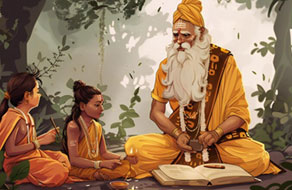
Dr. Sethu Raju and Pundit Pramod Sharma (Gaur) Long ago the Hindu sages arduously prayed to gods to know more about their own existence as humans and the uniqueness of the universe. Often, they were also possibly deeply indulged in discussions of religion and philosophy, including some enigmatic problems, such as the origin of universe and the origin of life. Although they did not arrive at any definite conclusions, the highly knowledgeable rishis did, however, leave a legacy of many written parables, in the form of lyrics and dialogues, with metaphors relating to the above problems. These have been treasured in the most ancient religious texts of the Hindus, the Upanishads and the Vedas. The following is one such precious parable described in the Chandogya Upanishad, one of the principal Upanishads. It is a brief dialogue between the father (Udhalaka) and his son (Svetaketu). After staying for many years with and learning from the great gurus (teachers), Svetaketu returns home to his father, Udhalaka, as a proud and knowledgeable son. One day, while strolling outdoors and discussing the meaning of Sat (the Being), Chit (the Consciousness) and Anand (the eternal Bliss), and the origin and evolution of the world (planet earth), Svetaketu asks his father, how could this ‘world’ with all its multitudinous variety of living and non-living forms be produced in this simple way? Wonderstruck by his son’s interrogation, Udhalaka asked him – “to fetch a fruit, lying on the ground, of the Nyagrodha (peepal or pipal) tree”. “Here is one, Sir”, said Svetaketu. “Break it and let me know what you find therein, son”, said Udhalaka. “I see some tiny seeds, Sir”, answered Svetaketu. “Crush one of the seeds, son”, asked the father. “Yes, Sir, I have done it so, Sir”, answered the son. “What do you see therein, son?”, asked the father. “Nothing, Sir”, said Svetaketu. “Yet in that subtle substance that is hardly visible to the naked eye, exists the awesome potential that can produce this huge Nyagrodha tree with many large branches bearing leaves, flowers and fruits”, said the aged and experienced father. Do you wonder at it, son? Likewise, all that exists in this universe was potentially in the Sat, dear son, and thou art That. Believe it, said father. Further, he philosophized with a profound saying, “out of nothing, only nothing can come; non-being cannot produce being, much less could consciousness come out of nothing”. Believe me son that “the causeless beginning, as the sage says, was, in fact, the Sat or Being with consciousness”. Purport and Commentary: The above dialogue between the father and the son appears quite ordinary but it does contain a high degree of religious and evolutionary thought. In fact, it is a dialogue between man and nature! While having complete faith in the basic precept of Cause and Effect in nature, the great rishis, the authors of the Chandogya Upanishad, did raise one of the most important questions – Was there a First Cause in the creation of this ‘universe’ containing myriads of planets with their own contents? Or, looking for the primary cause and also keeping faith firmly in the fundamental principle of cause and effect, one would go backwards on an unending trail, and finally believe that the universe came from nothing. With respect to the second view, the rishis unanimously dismissed it by saying that “nothing could have come from nothing; non-being cannot produce being, much less so could consciousness come out of nothing”. Therefore, the causeless beginning was indeed the Sat, the Primary or First Cause which itself multiplied and expanded to form all the living and non-living forms, thus strictly following and sustaining the universal precept of cause and effect, which is very obviously manifested in nature. This view is not, in fact, completely incompatible with the often cited the Big Bang hypothesis proposed by the present-day scientists to explain the origin of the universe. It is believed, according to the Hubble’s Big Bang hypothesis of the origin of the universe, that all the presently observed matter and energy in the universe were an infinitely condensed hot mass in the beginning which exploded, as a ‘Big Bang’, making the matter and energy diffuse and expand infinitely in time in all directions. Eventually, galaxies of planets were formed, including our unique and enduring planet Earth. Results of many investigations by scientists are available to explain, with some reservations, the origin and development of these galaxies in the universe. They do not, however, suggest the Primary Cause that produced the super condensed hot mass of matter and energy nor its eventual explosion as the ‘Big Bang’. Furthermore, this hypothesis, with no primary cause given, is in contradistinction to nature’s fundamental precept of cause and effect. From the Vedic perspective, could this primary cause have been the Sat or the causeless beginning? The great living astrophysicist, Stephen Hawking recently writes: “Science may solve the problem of how the universe was formed, it cannot, however, answer, why the universe bother to exist? May be only God can answer that”. Udhalaka, in his dialogue with his son, referred to two important concepts, one being that “out of nothing can come only nothing”. The other concept was that the life of all living beings is cyclical (birth and death), meaning that the seeds germinate and develop into adult plants, which in turn mature, producing seeds again, and eventually the plants die (Gita –chapter 2, verse 27: All living beings are bound in the cycle of birth and death). This view has also been vividly reflected in the Gita (Chapter 9, verses 8, 10). Krishna says – Using nature, which is mine own, I create again and again the living beings, keeping them entirely dependent on nature. Under my control, nature brings forth the moving and the unmoving and keeps the world going. The seeds of Nyagrodha (peepal) tree, as mentioned by Udhalaka, are indeed subtle, appearing as very small ‘particles’ to the naked eye, giving the illusion of nothingness, as reported by Svetaketu. But, each such small particle (seed), according to our present knowledge, is essentially a living unit and totipotent which with minimum externally available factors, such as water, right temperature and soil, can germinate and develop into a huge tree. The tree eventually will die after producing fruits and seeds making the entire tree-life cyclical, which phenomenon is common to all organisms
The Hindus-in Pursuit Of Peace
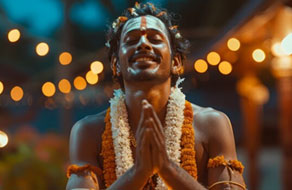
Sachendra Nigam and Sethu Raju The sound of one of the most frequently uttered chants that reverberates in all Hindu temples is – Om Shantih, Om Shantih, Om Shantih” (Aum Peace, Aum Peace, Aum Peace). This ritual of prayer for peace is very characteristically repeated thrice – chanting aloud first, addressing to the powerful forces, such as Earthquakes, Tsunamis, Volcanoes, Meteorites, and other natural phenomena that are beyond human control, second time addressing the same softer to the people and all life immediately around and out in the world, and finally addressing almost silently to oneself, to aatma or soul. This pattern of praying is significant, indicating the importance that the Hinduism, the religion and the way of life of the Hindus, gives to maintaining peace in the world. Unfortunately, this sincere and persistent universal praying for peace, however, has not ousted the human conflicts in the world. They still occur in many forms at all levels of the humanity. It seems, therefore, that, besides genuine praying for peace, the Hindus need also to identify and understand the causes that have generated conflicts among the humans of the world. To trace the causes of human conflicts, perhaps one has to understand the probable origin and evolution of the human race itself. A relatively recent publication entitled “Mapping Human History – Genes, Race and Our Common Origins” by Steve Olson, Mariner Books, Houghton Mifflin Co., New York, 2003, gives a succinct account of the chronology of the human race with its origin, development and diversity on the planet earth. It says that the modern humans appeared first in East Africa (Ethiopia, Kenya and Tanzania) 150,000 years ago. Subsequently, they spread out of Africa in different directions. By 100,000 years ago, some humans had migrated northward along the Nile Valley (Sudan and Egypt) and across the Sinai Peninsula into the Middle East. More than 60,000 years ago, some early humans made their way along the coastlines of India and southeastern Asia into Australia. About 40,000 years ago, a few other human groups moved out of northeastern Africa into Europe, and others through southeastern Asia into eastern Asia. Finally, about 15,000 years ago, some went along the wide plains of Siberia to Alaska (now separated by Bering Strait) and radiated southward throughout the length and width of the North and South America. These migration patterns of humans suggest that every one of the about 6 billion humans of the planet today is a descendent of a small group of humans, our ancestors, that originated and lived in East Africa 150,000 years ago. While spreading out of Africa, our ancestors had to face the vagaries of the environment or nature (land geography and climate) over which they did not have much control. The genius of these humans, however, was such that, instead of accepting what the nature had offered, they attempted to manipulate it for their own benefit with determination and ingenuity. Such an attempt was, in fact, a very important trait that distinguished the humans from rest of the animal kingdom and eventually led them into the path of technological innovation and development. The period from 50,000 years ago to 11,000 years ago (9000 BC), which is designated as the Late Stone Age (Upper Paleolithic), could be regarded as the first technological period of some degree of sophistication. This was the time when the tools and weapons, made out of stone and bone, were found in the areas of early human settlements; the use of metals was unknown during this period. Eight thousand years ago (6,000 BC), however, metals were found associated with the human settlements, copper being the first, indicating early technological development (The Atlas of World Archeology, edited by Paul G. Bahn, Checkmark Books, New York, 2000). The last ice age ended 11,500 years ago and allowed in the northern hemisphere milder climates that helped humans to migrate further northward and also to develop agricultural practices. The people domesticated wild plants with the result crop plants such as wheat, barley, lentils, etc. were developed, and similarly some domesticated animals such as goat, sheep, cattle and pigs were also developed. The early domestication of plants and animals took place in the Near East (Lebanon, Iraq, Syria and Turkey) where the people, at the time, had replaced their nomadic traits by stationary life, establishing small human settlements or communities. The availability of food resources further opened the way for activities replacing their earlier practice of nomadic hunting, gathering and scavenging. Finally, the human societies were established on the planet earth with the eventual disjunct development of three ancient civilizations, the Chinese, the Egyptian and the Indian, in the orient and the great Mayan civilization in the occident Americas that put them on the road leading to where the human race at present stands on this planet.Thus, in the last 100,000 years, in retrospect, small groups of humans migrated from Africa, multiplied and also settled in many parts of the world, developing early human civilizations. These early small human groups with their individual adaptive genetic potential were exposed to the highly regulatory influence of the environment. These combined genetic and environmental effects brought many changes to the peoples in their physical appearance and behavior to become the human groups or races that were identifiably distinct and remained different from each other in their new settlements; they were also together different from their African forebears. Such differentiated human groups or races were formed by 10,000 BC, evolved in isolation and each, in time, developed its own physiognomy, culture and tradition (The New Penguin History of the World, by John Morris Roberts, Publisher Penguin, London 2004), thus indicating the early human civilizations were, in fact, physiognomically and culturally highly diverse. In the last 2000 years, many human societies or races gradually enlarged and prospered in relative isolation and calm, and some even formed kingdoms. Human conflicts did, of course, exist among them during this period, and they were mainly due to the greedy actions of
Who Are You?
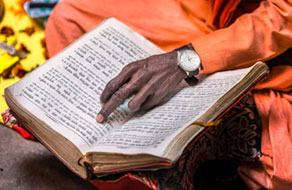
This is the teaching of the Bhagavad Gita (God’s songs or teaching): The above precepts can be analyzed in the following way. Just as you change your old clothes, furniture, cars, shoes, houses, jobs, etc., you also change your body after death. As manufacturer designs material products today for tomorrow, you design your next body today with your current actions or karma. The individual soul is known to make its journey through 8.4 million different material bodies. So, Gita advises us not to get too attached to this ephemeral body.You are ‘too busy’ in mundane functions, such as eating, sleeping, mating and in making a career. You do not try to find time to think and inquire seriously into life’s absolute truth. Instead, you waste time in chasing mirages in the desert or building castles in sand. People are busy in a modern excessive life style, such as partying, discoing, drugs and such. While deeply engaged in such frivolous activities, you tend to forget the inevitability of your imminent death. You do not realize the fact that, like all other animals, you will be killed by the laws of nature. You remain busy in material enjoyment, the so-called jolly life, but, believe it or not, you are like chicken, cows and goats waiting to be killed. Death is certain, and it can inflict on you anytime. At death, the laws of nature will determine what your future will be according to your previous karma. Human birth is rare, precious and sacred. You are presently in this human form. Therefore, you should use your consciousness to inquire more into the Absolute Truth of your existence than the frivolous matters around you, such as nine-to-five work schedule, marital and medical problems, and even filing income-tax returns. Unfortunately, most humans still remain deeply involved in excessive worldly desires and pleasures, which, in fact, are known to be present among all animals too. A knowledgeable person, therefore, knows that death is certain to any one born. Knowing that the imminent death is unpredictable, he prepares himself for the next life or for his liberation from the cycle of birth and death all together. Recognizing the ephemerality of human existence, he also questions – who he is, where he came from and what his future destination would be after the present life? An ignorant person, on the other hand, is ‘too busy’ engaged in the material life, trying to satisfy his own material desires and pleasures, ignoring the fact that the death is certain and just around the corner! Remain devoted to God!
Good to Know

Hindu Scriptures Nine kinds of Devotions: 1. to Listen, 2. Sing, 3. Worship, 4. Bowing down, 5. Serving, 6. Thinking, 7. Dedication, 8. Humility, 9. Intimacy.Nine Kinds of Ego: 1. Possession, 2. Wealth, 3. Singing hymns, 4. Knowledge, 5. Education, 6. Beauty, 7. Youth, 8. Family lineage, 9. Cast or sect Five Koshas or Coverings: Five Enemies: 1. Lust, 2. Anger, 3. Greed, 4. Attachment & Jealousy, 5. Ego.Three Stages of Life: 1. Childhood, 2.Young, 3. Old.Three Gurus: 1. Mother, 2. Father, 3.Teacher.Five Gods in Sanatan: 1. Vishnu, 2. Sun, 3. Shakti, 4. Shiva, 5. Ganesh. They represent: Aakashasya patir Vishnu, Agneshcheva maheshwaro, Waayaoh Suryaoh Kshiteresho Jeevanasya Ganaadhipa. Vishnu is the Lord of space and sky, Sun of air, Shiva of fire, Durga of Earth and Ganesha is the Lord of water. Five Great Elements: 1. Earth (soil), 2. Air, 3. Water, 4. Space, 5. FireThree Gunas: Satwa (Purity), Rajas (Luxury), Tamas (ignorance) Three Types of Karma:1. Prarabdha (that which was seeded in the last life and received in this life)2. Sanchit (that which we do in this life and receive the fruit in this life),3. Kriyamaan (that we do in this life and get the result in the next life). Eighty-four Lakh Species: (8.4 million species): 0.9 million in Water, 2.7 million nonmoving, 1 Million worms, 1 million Birds, 2.3 million Animals, 4 million Human species including ape and monkeys. Four kinds of ways to make one understand: 1. By teaching, 2. By Penalty, 3. By giving physical and mental pain, 4. By lifelong punishment.Four Social and Spiritual orders: Brahman, 2. Kshatriya, 3.Vaishya, 4.Shudra One hundred and eight beads of Mala:21,600 breaths are divided by two (one half for night, Remaining 10,800 is divided by 100. Some of the Acharyas have set the system that a sanyasi must chant the name of god 10,800 times a day. The figure of 108 is sometimes used in front of the name of a holy or highly respected person who’s connected with god. This results in a person who follows the law of repeating the Lord’s name with half of his life’s breaths. 108:108 is considered a holy number because there are 27 Nakshatra, each of them has letter for choosing the name of the time. The cycle of time is divided into12 Rashies. Time itself is God. Each and every second, whatever is being produced in this world is because of God. In numerology 108 is 9, number which represents God, complete perfection. Five kinds of Yagyaas: Main source of Dharmashastra: 1. Gautama, 2. Boudhayana, 3. Apastamba, 4. Hiranyakeshi, 5. Vashistha, 6. Vishnau dharma, 7. Harita, 8. ShankhaLikhita, 9. Koutilya Baikhanasa, 10. Brahaspati, 11. Manusmriti. The Two Epics (AD. 7th century):The Mahabharat written by Vyas contains one hundred thousand verses. It is one of the main scriptures which establishes the rule of life. Mahabharat tells one main thing “Do Your duty”. The Bhagwad Gita itself is taken from this scripture. Another great epic is the Ramayana. Written by Rishi Valmiki ji it contains twenty four thousand verses and also sets forth the rules of life. Other Ramayanas are; Sambritta ramayan, Aagastya Ramayan, Lomash Ramayan, Manjul Ramayan, Soupadhya Ramayan, Ramayan Mahamala, Souhaardra Ramayan, Ramayani Maniratna, Chaandra Ramayan, Maind Ramayana, Swaayambhuva Ramayan, Subhramha Ramayana, Subarchas Ramayan, Deva Ramayan, Shravan ramayan, Udanta Ramayan, Ramayan Champoo, Bhattikavyam, and Ramcharit Manas. Smrities: 1. Yagnavalkya Smriti, 2. Parasar Smriti, 3. Narad Smriti 4. Brahaspati Smriti.Four Vedas: 1. Rig, 2. Yajur 3. Saam 4. Atharv Up-Vedas:Vaishampayan Dhanurveda (weaponology), Ayruved (Herbal medicine), Aasthavangani (surgery and eight other ways of treatment), Aswinikumar Sanhita (Medicine), Brahatsanhitaa (treating the ill), Pushkal Sanhita (reason of getting sick of ill), Dhanwantari Sutra, Maan Sutra soop Shastram, Jabali Sutra. Banaspati, Nighantu, Arth Shastra (economics), Sampatti Shastram (politics and business), Vyakaran (grammar), Samved (music), Gandharvaved (dance, tune and beats), Gyan kanda (philosophical knowledge), jyotish Shastra (astronomy and astrology ) and prayer etc. Sapt-Shatu: (Seven tissues) Plasma, Blood, Muscle, Fat, Bone, Marrow, and Nerve.Three Doshas: Bat (cold), Pitt (temperature), Kaph (abdominal upsetting).Six-Ras: (Six Tastes) Sweet, Salty, Sour, Pungent, Bitter, and Astringent. Main Devataas:Indra (Kind of Devas), Kuber (Treasurer of Devas), Yamaraaj (God of Death), Chitragupta (secretary of Yamaraaj), Agni (fire), Marut (49 living pieces of Diti’s son in the form of air), Aryama (god ancestors), Pusha (God of animals), Ashwini Kumaar (god of herbal medicine), Chandra (goddess of mind), Brahaspati (teacher of Devas), Kartikeya (son of Shiva), Kaamdev (god of lust), prajapati ( son of Brahma and birth giver), Shukra (God of Virtuous and Bhrigythe great astronomer), Bishwakrma (god of construction and manufacturing), Muya (King of demons). Main Rishies:Naarad (Devoted mind) Vashisth (Priest of Suryayans), Manu (creator oh human beings through his mind), Vishwamitra (Became Brahman in the same life through his penance), Dadhichi (sacrificer of body for other’s others), Valmiki (Chanting Ram ram became the author of Ramayana), Markandeya (knower of end and beginning of era), Mudgal (respecting the teacher) Shukedeva (the great preacher). The Holy and Devine Godesses: Sita (Avatar of Bhagawati), Sati Damayanti (the most holy and powerful Devi). People who bought Revolution in Sanatan:Shree Shankaraccharya, Kumaril Bhatt, Sri Madhwacharya (1238), ShreeNimbarkacharya, Shree Ballabhacharya, Shree Ramanandacharya, Shree Chaitanya Mahaprabhu, Shree kanthacharya, Shree Abhinavaguptacharya, Shree Bhaskaracharya, Sant Tukaramji (1608), Samarth Ramdas Swami (17th century), Sant Gyaneshwar Ji, Guru Nanak Dev ji(1469), Surdas Ji, Tulasi das Ji, (16th Cen.), Narasi Mehta, Swami DayanandSaraswati(1876-), Ramkrishna Paramhansa(1836). Karmakand: Rishies set fort the system of Rituals, known as Brahmanas. The main Brahmanas are: 1. Aitareya 2. Satpatha, 3. Kaushataki, 4. Taitiriya, 5. ChandogyaSeven Holy Cities: Ayodhya, Haridwaar, Mathura, Kashi, Kanchipur, Puri, Dwarika.Sapt-Rishi: 1. Vashistha, 2. Atri, 3. Kashyap, 4. Vishwamitra, 5. Bharadwaj, 6. Jamadagni, 7. Gautam. Six Main Philosophies Advait: Advait Philosophy of Shankaracharya: advaita means non-dulaism. This philosophy believes that God is absolute reality and that which inanimates or animates is unreal of maya. Soul is identical with Brahm.Dvait: Dvait philosophy of Madhavacharya is a philosophy of two. Brahm and Jeev are related to each other. Creation is real act of Brahm.Dvaita-Advait: of Nimbark explains about Natural dualism